The Leadership Gap We Created
41% of technology leaders are considered unable to keep pace with change by their own boards. They are calling it a capability gap. When nearly half the C-suite lands in the same place, that is a pattern. Patterns live in systems, not people.
When a technology initiative stalls, the first question in most boardrooms lands on the leader. Is this the right person? Do they have what it takes?
It is a fair question. Sometimes the answer is no.
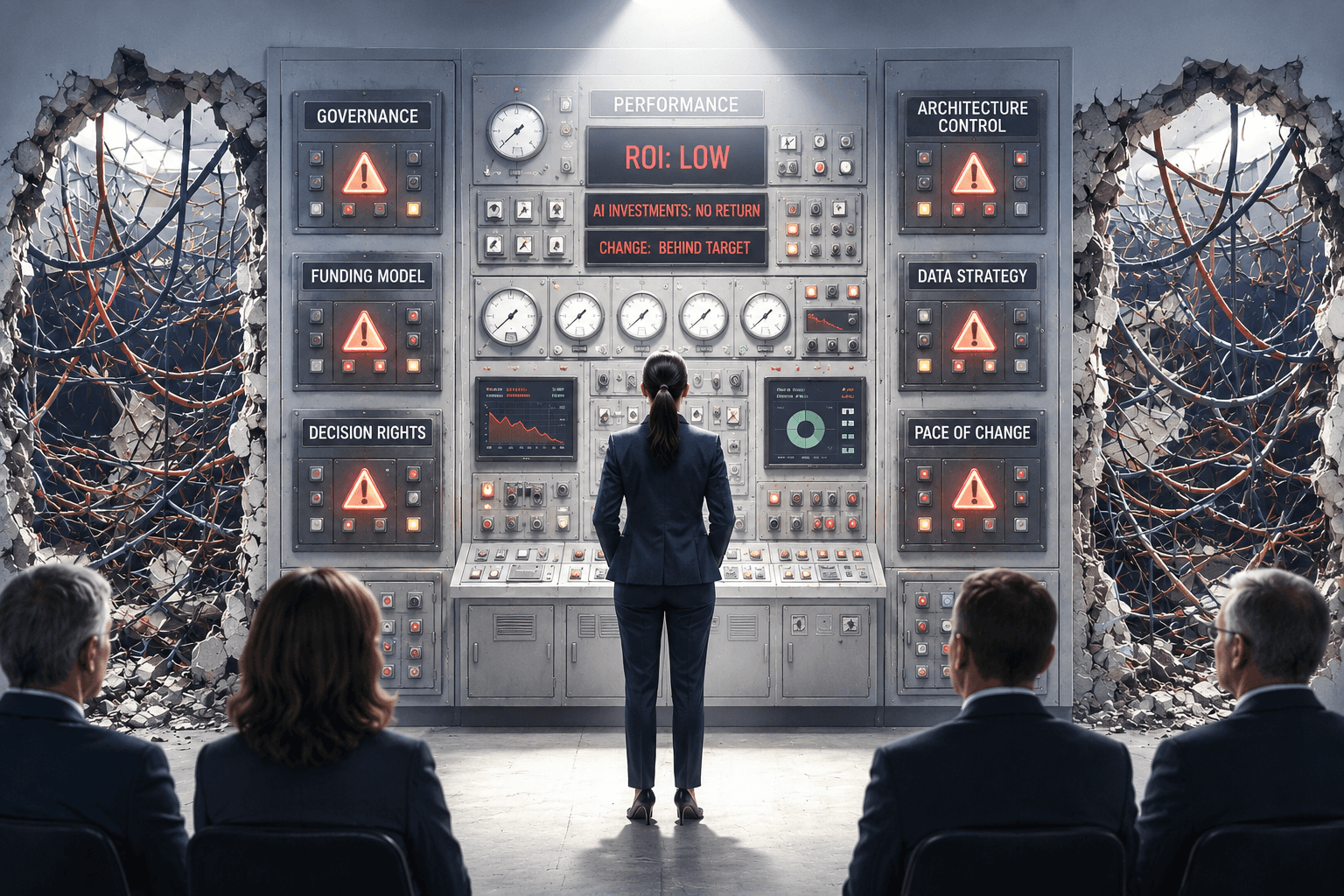
I'm always willing to hold a leader accountable when they need to lift their game. That accountability matters and it shouldn't soften. But Deloitte's 2026 Global Technology Leadership Study, surveying 660 technology executives globally, found 41% are considered unable to keep pace with technological change by their board colleagues and CEOs. 42% report low or no ROI on AI investments, while delivering measurable enterprise value is their stated primary mandate.
When nearly half the C-suite is seen as behind, something else is going on, that is a pattern. Patterns live in systems, not people.
Most of the leaders in that 41% are not disengaged. They are operating inside governance structures that predate the problems they are being asked to solve, with funding models that still prioritise stability over the kind of change the mandate requires. They were handed a new job description and an old set of tools.
The study calls it a capability gap. There's a different read available in the same data. Governance and funding models haven't changed. Leaders are being asked to deliver on a mandate that expanded without the operating model to support it. We keep diagnosing the person. The operating model is where the gap actually lives.
We can't hold leaders accountable for a system they didn't build and aren't empowered to change. The system that asks a tech leader to show AI ROI without authority over the architecture or the pace of change was designed by someone. It is being maintained by someone. At some point, we have to turn around and look at who.
Accountability that only flows to the person executing inside a broken system has a name. Displacement.
This matters beyond the individual leader. When we consistently locate the problem in the person, we protect the system from scrutiny. Boards keep asking the same question and avoid the harder one. The operating model stays unchanged. The next leader walks into the same structure and eventually lands in the same 41%.
The leaders in that 41% are, in many cases, exactly what their organisations asked for. They said yes to an expanded mandate. They kept moving. Accountability still applies. The question is whether accountability alone changes anything when the structure is the problem.
Rewriting this norm starts with the organisations around the leader. The question boards need to sit with is whether they have built something a capable leader can actually work inside. Whether the mandate comes with the authority it requires. Whether the governance model was designed for the problem at hand, or inherited from the one before it.
Hold the leaders who need to lift. Hold the system that made lifting harder.
That's the rewrite.
— Cindy Schwartz
Founder, Executive Excellence Group | Rewriting Leadership Norms